
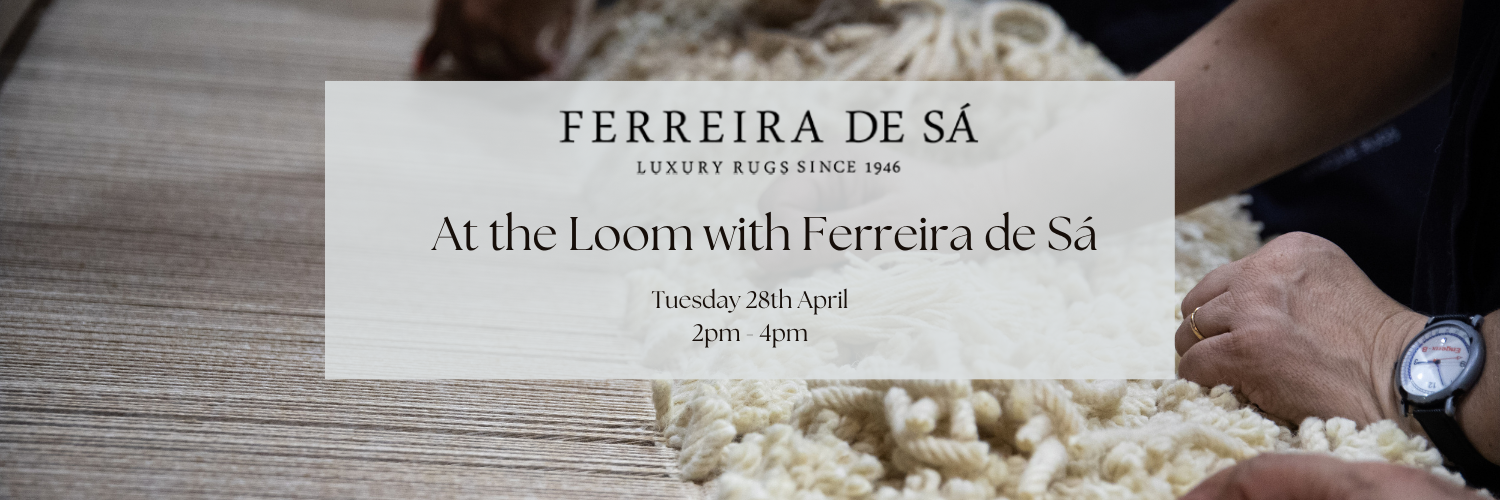
We are delighted to invite you to At the Loom with Ferreira de Sá.
A private and immersive experience celebrating the rare artistry of hand-knotting rugs.
For this special occasion, a traditional wooden loom will be installed in our showroom, forming the centrepiece of a live demonstration. You will be invited to observe up close as each knot is carefully tied by hand, and for those who wish, there will also be an opportunity to try hand-knotting yourself.
Light refreshments will be served, along with a selection of drinks including Portuguese port wine, as well as traditional Portuguese delicacies. This will be accompanied by an opportunity to engage in relaxed conversation with our experts, offering insight into the artistry, materials, and design thinking behind each piece.
In addition, we are pleased to share that we will donate £5 to the charity Furnishing Futures | Charity creating healing homes for domestic abuse survivors for every guest who attends this event.